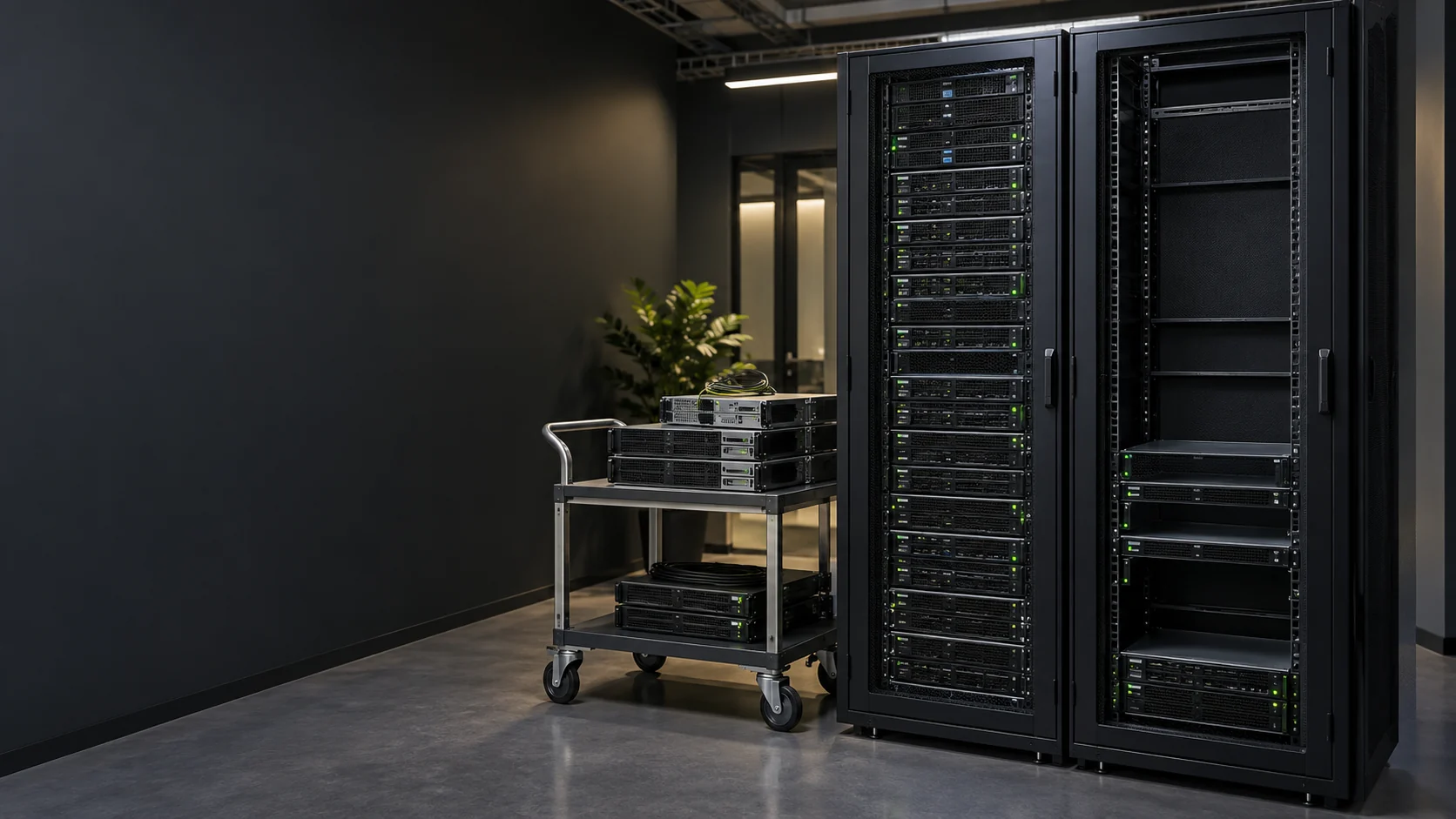
Complex technology estates
Decommission infrastructure with custody, sequencing and evidence.
Plan racks, servers, storage, networking and media around site controls, data risk and operational dependencies.
Complex technology estates
Plan racks, servers, storage, networking and media around site controls, data risk and operational dependencies.
Data-centre work requires a scoped sequence, named responsibilities, change control, media handling, asset reconciliation and clear project closure.
Book collectionService capability
Controls designed around the project—not added at the end.
Detailed scope
Locations, racks, dependencies, access windows and responsibilities.
Controlled removal
Safe disconnection, handling, packing and staged removal.
Infrastructure audit
Reconcile servers, storage, network and associated media.
Decommission pack
Provide asset, data, route and exception evidence.
Evidence delivered
A customer-ready record of what happened to the estate.
The final evidence depends on the contracted scope, but the operating model is built to connect asset identity, data treatment, final route and project exceptions.
What information do you need to quote?+
The most useful starting information is equipment type, approximate quantity, locations, collection timing, access restrictions, data-bearing status, required evidence and the preferred reuse or recycling outcome.
Do you guarantee value recovery?+
No. Residual value depends on model, age, configuration, condition, quantity, market demand, data-treatment result and the agreed commercial model. Eligible assets and deductions should be reconciled transparently.
Can reusable devices avoid recycling?+
Where data security, condition, ownership, economics and client policy allow, suitable devices can be redeployed, refurbished, remarketed or routed through a controlled social-impact programme before material recycling.
How is data destruction evidenced?+
The project scope should define the method and the expected evidence. Records can include the asset or media identifier, treatment method, result, date, exception state and project certificate.
Plan the next step
Turn redundant technology into a secure, documented outcome.
Share the estate, locations, timing and evidence requirements so the project can be assessed properly.